

Nepal Rights Commission Recommends Action Against Senior Officials Over Tinkune Violence
The NHRC has recommended departmental action under Article 249(2)(b) of Nepal’s Constitution.
Published October 7, 2026 7:25 pm GMT+0545
Nepal’s National Human Rights Commission (NHRC) has recommended departmental action against several senior security and administrative officials over their handling of the violent pro-monarchy demonstration in Kathmandu’s Tinkune area in March 2025.
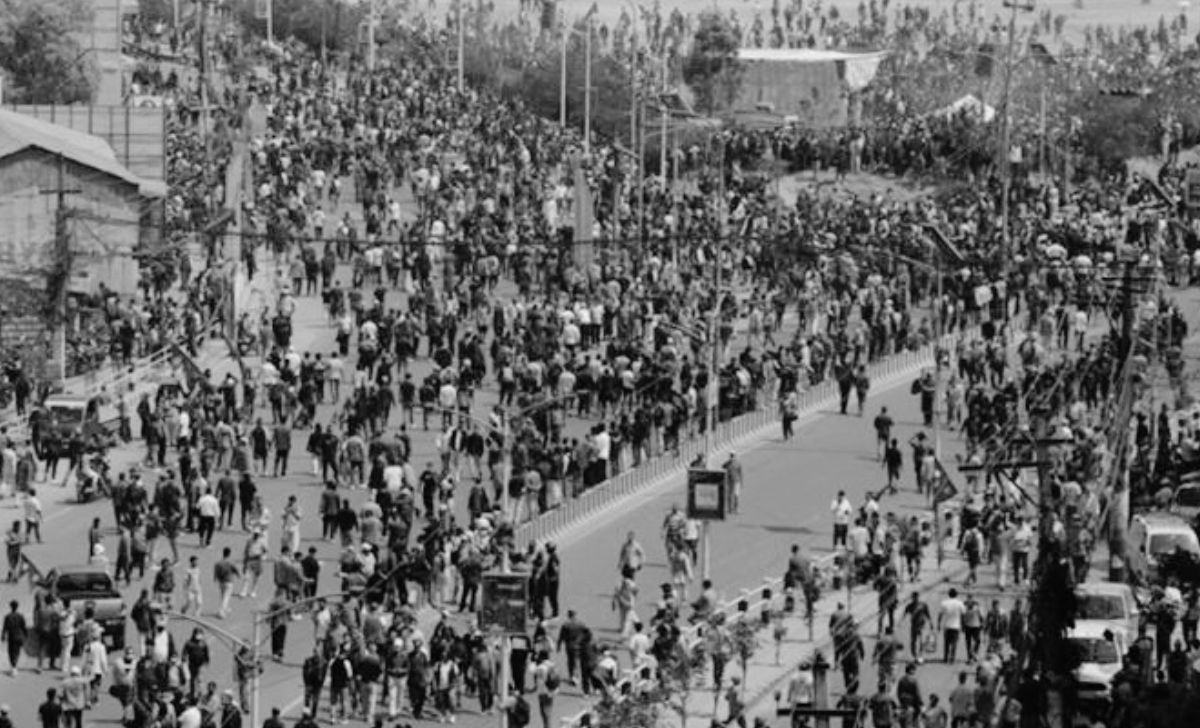
The commission made the recommendation in an investigation report released on Tuesday, October 7, 2026, concerning the events of March 28, 2025, when a pro-monarchy rally in Tinkune escalated into violent clashes, arson and attacks on property.
The officials facing recommended action include former Kathmandu Metropolitan Police Chief SSP Bishwo Adhikari, who has since been promoted to Deputy Inspector General (DIG), SP Apil Raj Bohara, Armed Police Force SP Shailendra Shrestha and then-Chief District Officer (CDO) of Kathmandu, Rishiram Tiwari.

Grow with Niguro Ads
Simple targeting, honest numbers, pay per view or click. See how Niguro Ads work.
The NHRC has recommended departmental action under Article 249(2)(b) of Nepal’s Constitution.
That provision allows the commission to recommend departmental action against an official who is responsible for preventing human rights violations but fails to perform that responsibility or demonstrates negligence in carrying out their duties.
Officials accused of failing to ensure adequate security
According to the commission, the officials failed to adequately assess the activities and preparations of the protest organisers and formulate and implement an appropriate security plan.
The NHRC also found shortcomings in the implementation of the Integrated Special Security Plan approved by the District Security Committee.
The commission said security personnel and resources were not deployed according to the decisions contained in the plan, contributing to a failure to maintain public order during the unrest.
The recommendation therefore focuses not only on the conduct of individual security personnel during the violence but also on the preparedness and decision-making of senior officials responsible for Kathmandu’s overall security arrangements.
Government ministries also asked to take notice
Alongside the recommendations for departmental action, the NHRC has called the attention of the Office of the Prime Minister and Council of Ministers, the Ministry of Home Affairs, Nepal Police and the Armed Police Force to the findings.
The recommendation was made under Section 5(1) of the National Human Rights Commission Act, 2012.
The commission has effectively asked the government and security leadership to examine the failures identified in the report and take appropriate institutional measures.
The findings come as questions remain over the security response to the Tinkune violence and whether authorities adequately anticipated the possibility of the demonstration turning violent.
Tinkune protest turned deadly
The pro-monarchy demonstration on March 28, 2025, initially began as a political rally but descended into violence in Kathmandu.
Protesters clashed with security forces and attacked buildings and vehicles. Several properties were set on fire, while police and other security personnel used tear gas, water cannons and other crowd-control measures to regain control.
Two people were killed during the unrest, including journalist and photojournalist Suresh Rajak and protester Sabin Maharjan.
The NHRC had monitored the incident and subsequently investigated the actions of both protesters and security agencies.
The commission has said that violence and destruction by protesters were unacceptable, while also examining whether security forces fulfilled their responsibility to protect lives, property and human rights.
Expired tear gas also highlighted
The commission’s latest findings have also raised concerns over the equipment available to security agencies.
In a related recommendation from its investigation, the NHRC said security agencies had extensively used expired tear-gas canisters during the Tinkune incident.
Statements obtained from security officials indicated that agencies lacked adequate resources and that essential logistical equipment had not been procured for a considerable period.
The commission called for security agencies to be adequately equipped and specifically recommended that expired tear gas not be used.
The finding adds to the wider criticism of the preparedness of security agencies ahead of the March 2025 demonstration.
Focus on accountability
The NHRC's recommendations place responsibility on senior officials who were in charge of security planning and administration in Kathmandu at the time.
Rather than limiting the investigation to individual incidents during the clashes, the commission has examined whether authorities had properly assessed the threat posed by the protest, prepared an appropriate security strategy and deployed personnel and resources according to the approved plan.
Its recommendation for departmental action now places the next step with the relevant government authorities.
The report is likely to renew debate over the handling of the Tinkune violence and the accountability of officials responsible for public security during large-scale political demonstrations.
How we report: Editorial Policy Corrections Report an error

Ask once. Get the answer.
Nepal's own search engine, with quick answers right at the top.