Laxmi Rajbanshi Murder Case Takes New Turn as Three Nepalis Are Arrested
Police have not disclosed whether any of the three have admitted to or denied the allegations.
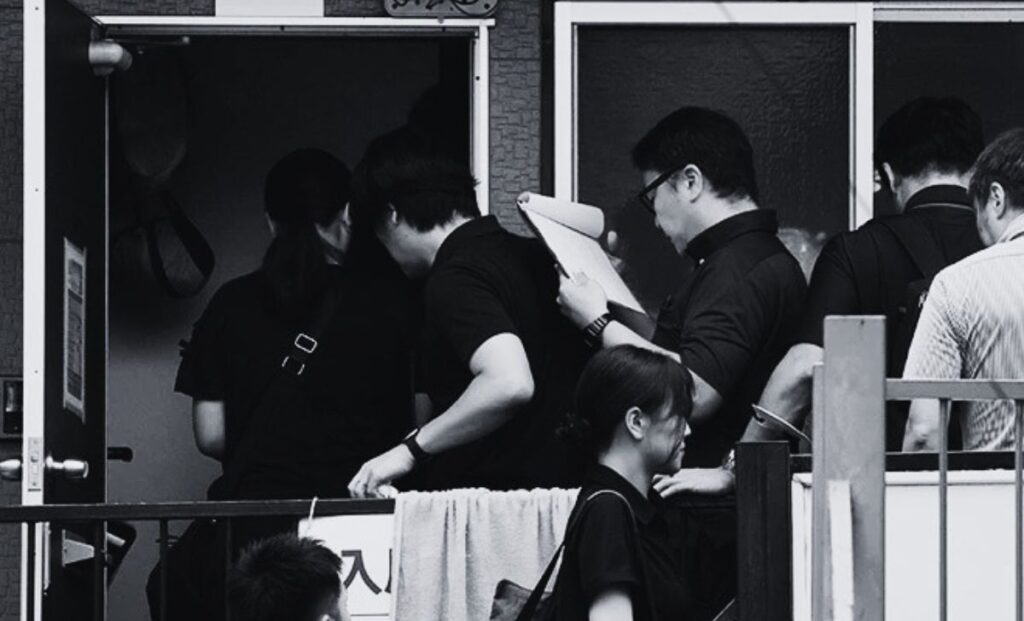
Laxmi Rajbanshi Murder
Three Nepali nationals have been arrested in Japan over the killing of 25-year-old Nepali student Laxmi Rajbanshi in Fukuoka, with police alleging that she was beaten, strangled and thrown from her apartment into a river.
The arrests on Tuesday mark the biggest development in the case since Rajbanshi’s body was found in the Naka River in central Fukuoka on 19 August.
The suspects are Sanju Tamang, 28, a vocational-school student living in Hakata Ward, Fukuoka; Amista Tamang, 25, an unemployed woman living in Tosu, Saga Prefecture; and Prabin Lama, 22, a student living in Tosu. All three are Nepali nationals. Japanese police arrested them on suspicion of murder.
Police have not disclosed whether any of the three have admitted to or denied the allegations.
Police allege attack inside Rajbanshi’s home
According to Fukuoka Prefectural Police, the three suspects allegedly acted together between the night of 18 August and the early hours of 19 August at Rajbanshi’s apartment in Chuo Ward, Fukuoka.
Investigators allege that Rajbanshi was repeatedly struck on the head with a cooking pot and had a rope tied around her neck. Police further allege that she was taken to the balcony and thrown or forced into the river below, resulting in her death by drowning.
Japanese reports say police believe the 28-year-old Sanju Tamang may have carried out the physical assault, while the other two suspects are being investigated as alleged co-conspirators. However, the precise roles of all three remain part of the investigation.
Body found in Fukuoka river
Rajbanshi’s body was discovered at about 5:45am on 19 August in the Naka River near Tenjin in central Fukuoka.
Her home was about 2km upstream from where the body was found. Police had already suspected homicide after finding multiple injuries to her head and signs of a struggle inside her apartment.
Japanese media reported that bloodstains were found in the bedroom, along with evidence suggesting that Rajbanshi had fought with someone. Investigators also noted that her mobile phone had not been found in or around the area at the time.
Earlier reports said Rajbanshi had numerous injuries to her head, including wounds that were deep enough to expose bone. Police subsequently established a special investigation headquarters and treated the case as murder.
Relationship dispute under investigation
Police are now examining whether a dispute involving a romantic relationship was behind the killing.
According to Japanese investigators, Rajbanshi had been in a relationship with a man who was also living with Sanju Tamang. Police suspect that tensions surrounding the relationship may have played a role in the killing.
Japanese television reports have described the case as potentially involving a love triangle. Investigators are examining the relationships between Rajbanshi, the man she was reportedly dating and the three arrested suspects to establish what happened before the alleged attack.
Earlier in the investigation, Rajbanshi’s father told Japanese media that his daughter had previously informed the family about conflicts involving other Nepali people. He said she had told her family about an argument with a man and an incident in which two women allegedly grabbed her and pulled her hair. The family said Rajbanshi subsequently moved to her current apartment. The connection between those earlier disputes and her death has not been established by police.
Her final hours
Rajbanshi had been living in Japan since 2023 and was studying at a vocational school while working part-time to support herself and send money to her family in Nepal.
Japanese reports said she was seen leaving her part-time workplace at around 10:30pm on 18 August. Investigators believe she may have returned to her apartment before the attack.
Her body was discovered several hours later in the Naka River.
Investigators have been examining the movement between her apartment and the river, as well as the circumstances inside her home. Earlier in the investigation, police also considered the possibility that more than one person was involved because of the evidence found at the apartment.
Family devastated by her death
Rajbanshi’s parents in Nepal had previously spoken to Japanese media about their daughter’s death.
Her mother said she initially could not believe that Laxmi had died. Her father described her as caring toward her family and said she regularly contacted them from Japan and helped support the household financially.
He also said Rajbanshi had regarded Japan as a safe country and had hoped to build her life there.
The family has appealed for the investigation to be completed and for those responsible to face justice under Japanese law.
Police investigation continues
The arrests do not conclude the investigation. Japanese police are continuing to examine the suspected relationship dispute, the events inside Rajbanshi’s apartment, the movement of her body into the river and the individual roles of the three suspects.
Police have not publicly disclosed the suspects’ responses to the allegations.
For now, the central question for investigators is what happened inside Rajbanshi’s apartment during the hours between her return home on 18 August and the discovery of her body the following morning.
The case has attracted significant attention in both Japan and Nepal because of Rajbanshi’s age, her status as a Nepali student and the arrest of three other Nepali nationals in connection with her death.



Replies
No replies yet. Log in to be the first to reply!